If you’re reading this, then the site is back up and running. As those of you who have active websites know, the more technical things get, the easier it is for things to go sideways. The more they go sideways, the harder it is to get to the root of the problem. Anyways – after a lot of troubleshooting and chats with tech support, I think things are back on track. I have a lot of things that I still need to check by activating and deactivating and reinstalling things, but for now, welcome back!
New book on the 17th CVI breathes new life into a long-neglected history
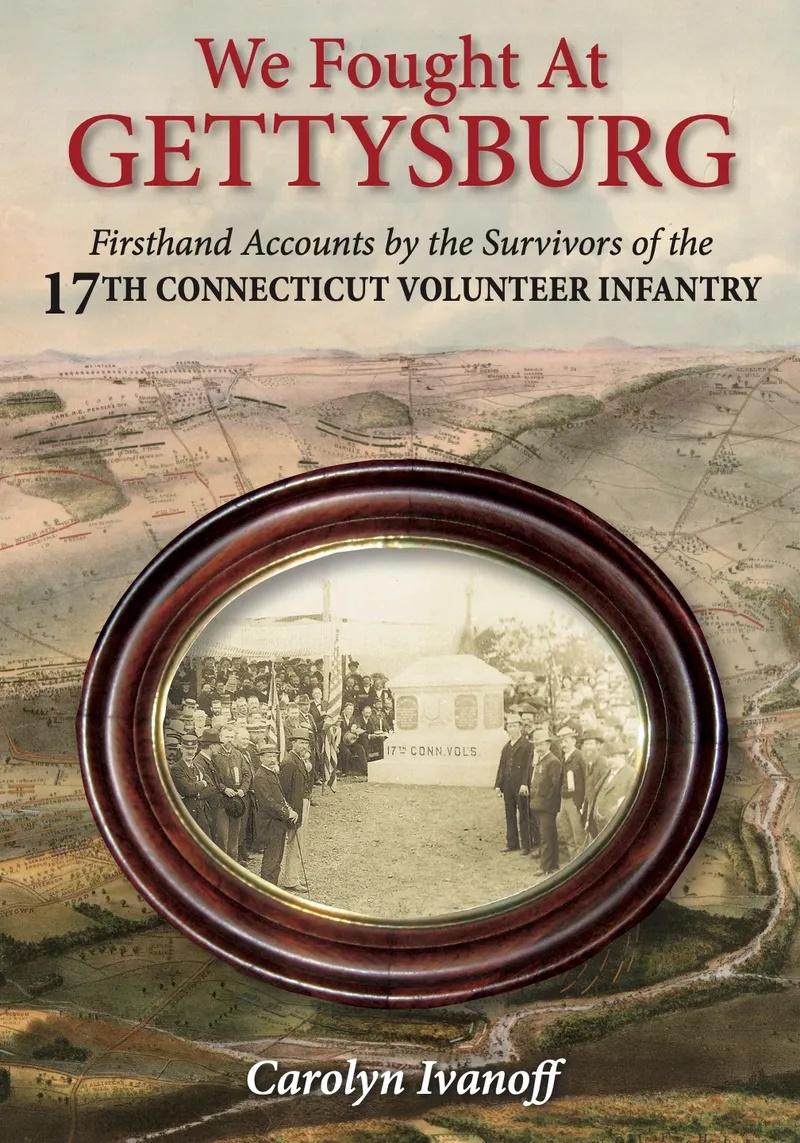 Quite literally years in the making, We Fought at Gettysburg by Carolyn Ivanoff not only fills a void in the published annals of the 17th Connecticut Volunteer Infantry but also helps to complete (at least in part) a journey begun in the 19th century by veteran William Warren to tell the story of the regiment. This well-written volume gives the reader an eyewitness history of the 17th Connecticut Volunteer Infantry at Gettysburg.
I first made my acquaintance with Warren’s history in the mid-1990s at what is now the Bridgeport History Center at the Bridgeport (CT) Library. A chance visit there looking for information on the 17th Connecticut led me to the indomitable Mary Witkowski, long-time Bridgeport City Historian, head archivist of the Historical Collections of the Bridgeport Public Library and all around champion of all things Bridgeport (who sadly passed away this spring). Mary showed me the many volumes of both typed and handwritten history compiled and written by veteran William Warren. Art House, in one of the earliest sections of this site, aptly described them as a “treasure trove of information” on the history of the regiment.
It was also large, unwieldy and nearly unmanageable. It is clearly the life’s work of someone who never stopped amassing information and stories from his fellow veterans. There was a book in there for someone to write. That is, someone who would do the judicious editing Warren was never able to do.
Fast forward to 2018, when I first heard that someone was going to finally tackle it. That someone was Carolyn Ivanoff. Carolyn has been a friend and contributor to this website for years, and now her book is available. Today, everyone can read the firsthand Gettysburg stories so meticulously collected through the decades by Warren. Many, many photos accompany the text – some of which are familiar to visitors here and some not seen for the better part of a century, as well as excellent maps.
House noted that some “of the many accounts…were written decades later and must be considered in the context of the passage of time, and in the warming of memories by old men recalling their youthful participation in the greatest adventure of their lives.” That may be, but the book provides an eyewitness history of Gettysburg that has withstood the test of time.
What should be noteworthy is that the book is well over 400 pages – and that covers primarily the Gettysburg campaign. It should give the reader some idea of just how vast the original manuscript is. Carolyn has done admirable work distilling it down to a manageable, informative and educational read. I highly recommend that anyone with an interest in the 17th Connecticut Volunteer Infantry get themselves as copy – today! I would like to think that William Warren would be proud.
The book is available from a number of sources, but consider supporting local businesses. You can also purchase the book directly from Gettysburg Publishing, LLC at www.https://gettysburgpublishing.com/.
From the publisher:
We Fought At Gettysburg follows the 17th Connecticut Regiment through the Gettysburg Campaign and beyond in June and July of 1863. William H. Warren dedicated his life to compiling the accounts of his comrades in the 17th Connecticut. Many are published here for the first time. These are the words of those who lived through the trauma of combat and survived to write about it. Many of these men were wounded, taken prisoner, lost friends, and suffered themselves on this great battlefield of the war. These men tell what they experienced at Gettysburg in their own words. They describe what they saw, thought, and felt on the battlefield. Their story is told here through fascinating firsthand accounts, numerous photographs, including a photographic index of the regiment, and maps by Phil Laino.
New additions to Images of the 17th
Hello, all! It’s been a very long time since anything was added to the site. Today 3 postwar images were added:
- Private Charles H. Clarkson – Company E
- Sergeant George Hale – Company E
- Private John A.Lowden – Company I (2 different photos)
Sad news
I recently received an email from Bob Rosati. Bob is the driving force behind the 17th CVI virtual cemetery on Find A Grave. Many of you have benefitted from the work that Bob and his fellow contributors have done in tracking down and documenting the final resting places of (currently) 991 members of the regiment.
From Bob:
“I want to let you know the sad news that Charlene Henderson passed away in November, in case you hadn’t heard. As you know, she started collecting biographical information on regiment members many years ago, including burial sites, long before I started my project. We “joined forces” about four years ago and she added a wealth of information to the biographies of many members, as well as identifying the gravesite locations of several I was unable to find. She was enthusiastic and exceptionally energetic and a great researcher (better than me). I’ll miss her as she also had a great sense of humor, but her contribution will live on in the Findagrave site (and your website) in addition to her many other projects.”
Anyone who spent any time looking at the entries for the 17th CVI virtual cemetery will see quickly what Bob is talking about – there is a ton of additional information added to many of the entries there, all of which add an extra dimension to the stories of those soldiers (and in many cases, their families).
For the casual visitor to this site, looking for information about one of their ancestors, the hours of research put in by the various contributors to this site and to Bob’s project are probably not readily obvious. It is to me, though, and whatever value is derived by others is a direct result of the dedication and commitment of folks like Charlene.
I’ve posted her obituary below. I only ever knew Charlene from her role as an indefatigable defender of the memories of the soldiers of the 17th Connecticut, but she was so much more.
A wartime wedding (the Horace Judd story continued)
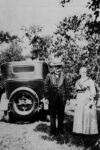
Just about the time this website received a major facelift in the summer of 2011, I had written a post about the wartime wedding of one Horace Q. Judd. That story is told in the post A Wartime Wedding in the 17th Connecticut Volunteer Infantry. For those who recall the original story, it was on the occasion of the 50th anniversary of Reverend and Mrs. Judd that the story of their wartime wedding made national news. Jim was kind enough to send along some family photos of the Judd family. In the photo at left are Horace and Ellen Judd.
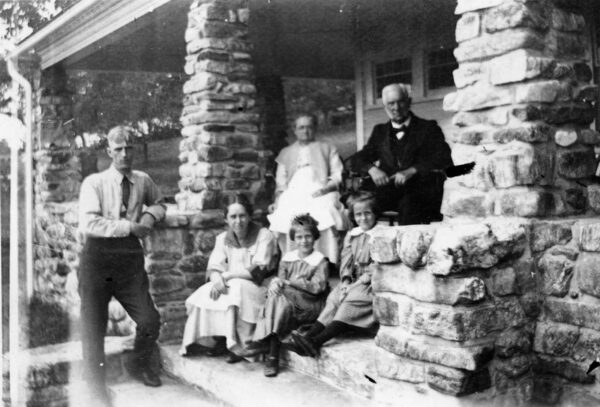
In the original post I wrote that Horace Judd was captured on the first day of fighting at Barlow’s Knoll and was seemingly able to escape his captors on the march south. Family lore, however, says that Horace was too sick to march and was left behind when the Confederates retreated, being nursed back to health by a woman in town.
My thanks to Jim for the additional information om Horace Judd.